
Waste Intervention
Launched in April 2016 ‘We are Walukuba’ launched their new Waste Action Intervention. This programme incorporates community service, performance, focus group discussions, photography and their Green Briquette Project. The aim of all these integrated activities is to encourage both the local community and Jinja Municipal Council to adopt better waste management practices and to take responsibility for their environment. The day begins with community service in which members clean the area surrounding the chosen intervention site. A drama is then followed by a focus group discussion with the local community. Photography is used to document waste disposal of commercial sites and as evidence in their advocacy to local authorities, and group members use social media as well as radio and newspaper media to promote their activities to a wider audience.
Members of ‘We are Walukuba’ conducted community-based research at both the household level and with the council to discover local people’s attitudes to waste disposal and management, and what waste disposal services the Council were meant to conduct in Walukuba and Jinja more widely. This allowed them to understand the situation on the ground before developing an intervention project that reflected and spoke to local problems and concerns. Before and after these events members conduct household questionnaires in the villages or commercial areas in which they will stage their events in order to gather further date on local attitudes and problems and enable members to evaluate the impact of these events.
Community Service
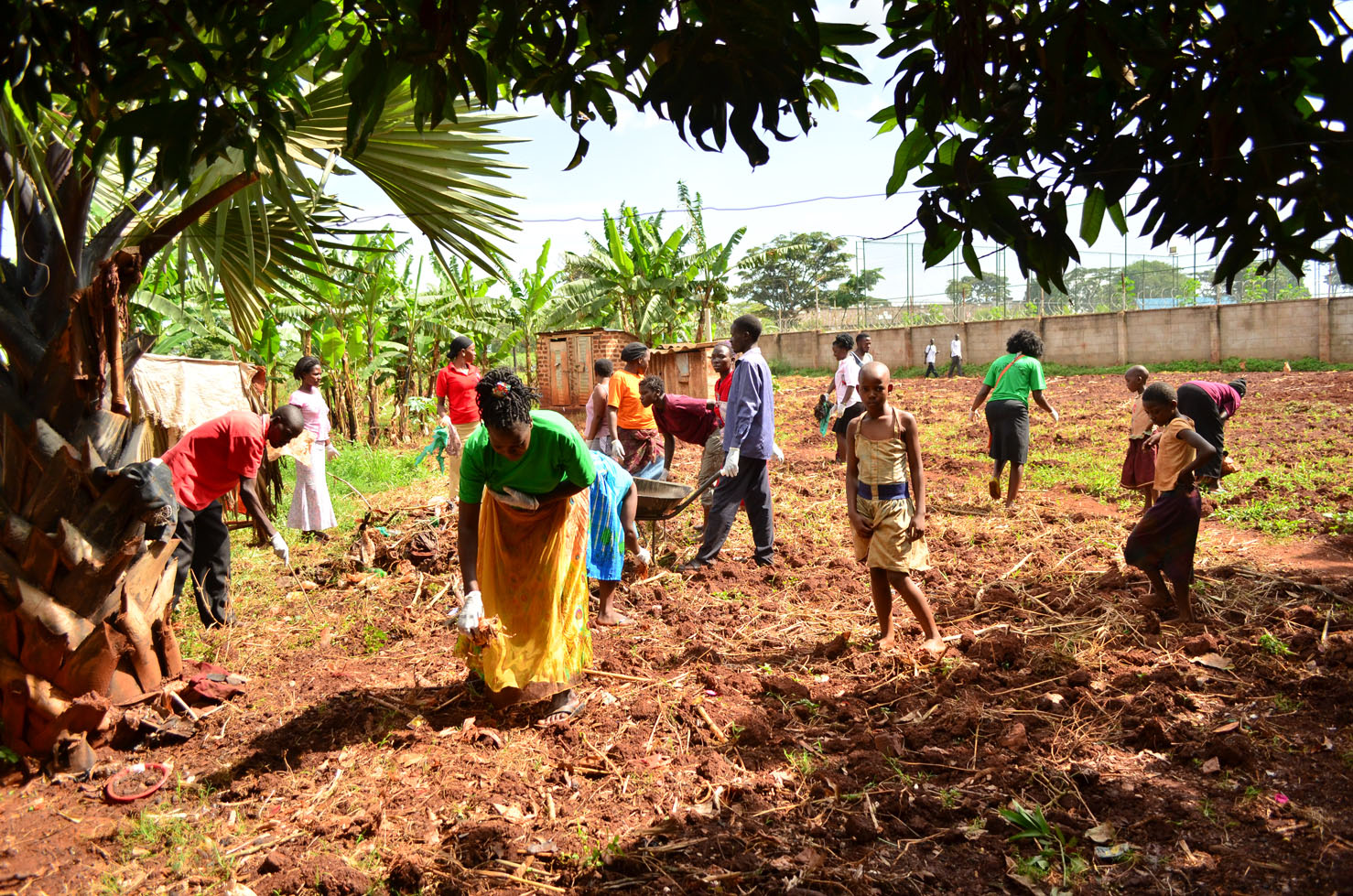
Since December 2015 the group have been conducting community service. On the last Saturday of the month they choose a local area to clean up. Wearing bright t-shirts and singing their community anthem ‘We are Walukuba’, members use gloves and tools donated by the council to clean up commercial and residential areas in their local community. They invite local residents and workers to join them in their efforts, often holding a focus group discussion at the end of the process to discuss the risks of not collecting waste and share ideas for keeping the area clean in future. To build on these efforts and to set an example to market vendors and local residents, and sensitise them on how to care for their environment and improve their health, they have incorporated this into their Waste Action Intervention events.
Members move around the village or commercial area they have chosen to conduct the intervention in, collecting all the waste with the help of local residents. They demonstrate how to separate organic and non-organic waste. The non-organic waste has to be burnt as there are currently no recycling options available to the community. The organic waste is collected for turning into bio-char for the Green Briquette Project.

Performance
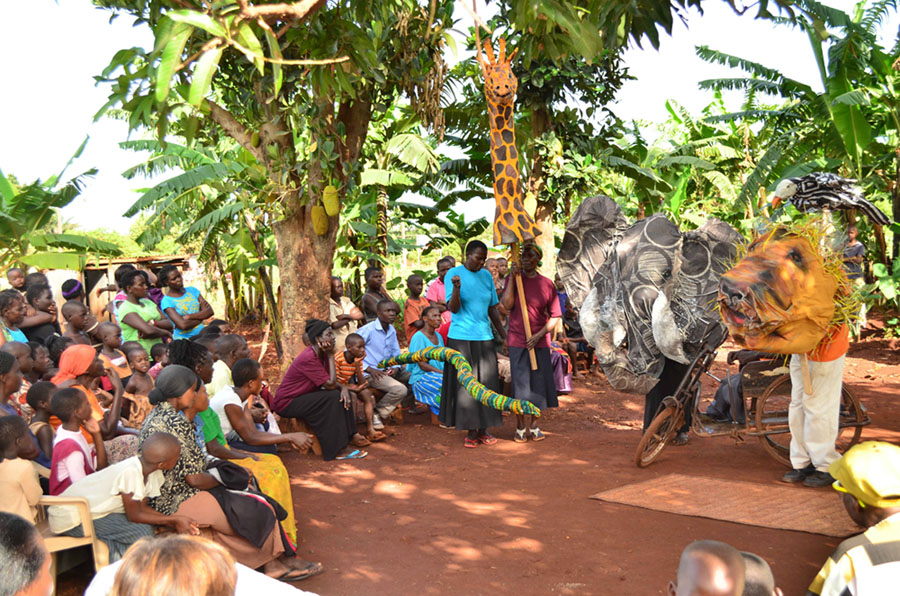
The group then performs a play called ‘The Kingfisher’s Story’. At the beginning of the play members dance onto stage singing their anthem ‘We are Walukuba’ and act out carrying out a community clean-up. They are then challenged by passers-by who disparage their work. The script draws on real opinions collected during community research, including that members are ‘stupid to work for no money’, ‘it is dirty work for less developed people’, and ‘it is the council’s responsibility to deal with rubbish’. There is then a sing-off between the community activist group and those who do not care for their environment. When there is a risk of the two groups fighting a storyteller breaks in and invites the audience to listen to her story. This is when the group perform the play ‘The Kingfisher’s Story’.
 |
 |
The Kingfisher’s Story is adapted from a Kenyan folk story. The story tells of animals meeting in the forest when it is very, very hot. Elephant, Giraffe and Snake debate the causes until interrupted by the very stupid King Lion who threatens to eat everyone. At this point Eagle flies in and tells everyone to flee for their lives because there is a forest fire. The animals panic and head for the Nile. They worry about the smaller animals who won’t be able to cross but the Lion says the strong must look after themselves and dives in – whereupon he gets eaten by a huge crocodile. While the animals are still reeling with shock a small Kingfisher flies across the Nile and swoops to pick up a beak full of water before heading towards the fire. Eagle asks what she is doing and she says she is going to put out the fire. When the other animals challenge her, saying she is only one tiny bird, she replies that she might be one but at least she is trying to do something to save all their homes.

At this point the storyteller steps back in and begins to facilitate a community focus group discussion with all those present, inviting all of the audience to share their ideas about what the animals should do next. Members of ‘We are Walukuba’ encourage the community to discuss their ideas about waste management and to generate grassroots solutions to environmental problems by working together and with us.